The Ultimate Lay Reviewer Checklist for Lay Summaries

Lay review is an essential step in the plain language summary (PLS) writing process. The reason being that it is extremely important that the PLS, or lay summary, is written in a patient-friendly, easy-to-understand style. Lay reviews also provide the medical writer with invaluable information to ensure that the document meets these standards.
Generally, lay reviewers are those with a non-science background. However, it is vital that lay reviewers are trained to know what to look for. When getting started, lay reviewers should ask themselves these questions while reviewing a plain language summary:
- Is the following addressed: Who, What, Where, When, Why, How?
- Is the text ordered logically and not redundant?
- Is the main purpose of the study obvious at first reading?
- Are short sentences used?
- Is the text appropriately broken up in paragraphs or bullet points?
- Are everyday English words used instead of complex language?
- Are complicated medical terms defined at first use?
- Are simple verbs used, such as “buy” instead of “purchase”?
- Are the timing of events clearly defined?
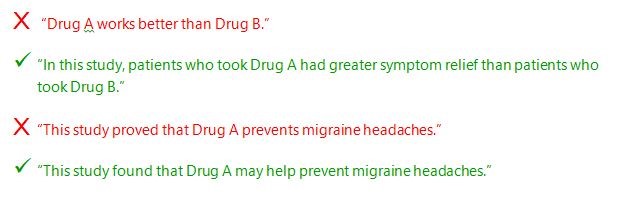
- Is the text is non-promotional, including no suggestion of efficacy, safety, or intended use, or no persuasive wording to emphasize safety or efficacy?
- Are graphics easy to read and understand?
- Are graphics consistent with the message in the text?
- Can all graphics be understood on their own, without having to read the text?
Key Issue: Avoiding Promotional Language
It is vital that lay summaries remain as neutral, non-promotional documents. The lay reviewer should check that any language used in the PLS is not promotional; this is an essential aspect of the lay review process.
Recognizing promotional vs. non-promotional language may be difficult at first. Here are a few examples:
Suggested For You

perspectives
July 30th, 2024
The Critical Role of Quality Control (QC) – Medical Writing and Beyond
perspectives
July 23rd, 2024
PSI 2024 Ignited Conversations on External Data Sources, Requirements for Estimands, and Bayesian Methodology for Statisticians in Pharma

perspectives
July 16th, 2024
Key Steps to Successful CMC Authoring of IND and IMPD Submissions

perspectives
July 9th, 2024
Managing RTOR Submissions: How to Run a Successful Race from the Top Line Starting Line

perspectives
July 2nd, 2024
Part 1: RWD Noninterventional Study Design and FDA Engagement Opportunity for Early Stage Oncology

perspectives
June 21st, 2024
Peer-Reviewed Journal Articles: The Crucial Role of Publication in the Pharmaceutical Industry

perspectives
June 14th, 2024
A Structured Approach to Benefit-Risk Assessment Throughout Product Development in the Pharmaceutical Industry

perspectives
June 6th, 2024
Datacise and Diversity in Patient Enrollment: Combining Geospatial and Demographic Data to Aid Site Selection

perspectives
May 29th, 2024
Confined Deferrals in Clinical Trial Applications: Anticipating the Revised EU CTR Transparency Rules

perspectives
May 21st, 2024
Psychedelics and Regulatory Considerations Part II: A Shift in Lexicon and Implications of “Nonmedical Use” On Labelling

perspectives
May 10th, 2024
Psychedelics in Drug Development and Regulatory Considerations Part I: Benefit-Risk

perspectives
April 29th, 2024
Validation of Clinical Dashboards for Decision Making