Behind-the-Scenes: Staying in Front of Pharmaceutical Industry Regulations

Regulations in the pharmaceutical and biotech industry are constantly evolving. Staying informed of all updates and navigating changes internally is a monumental task. To learn how MMS experts traverse these waters, we connect with Amanda Beaster, Ph.D., Technical Manager of Regulatory and Medical Writing and Caitlin Breakey, Compliance Specialist, at MMS.
With our industry changing so rapidly, how do you stay up-to-date with the latest regulations and requirements?
Breakey: The Regulatory Operations and Compliance Department at MMS completes an extensive, ongoing monthly review of all health authority websites in addition to actively reviewing real-time notifications of regulatory content updates. Once a month, all updated and/or new regulatory content, including guidelines and guidance for industry, is reviewed for relevance. If found pertinent, these updates are then distributed to colleagues within each department for review. The Regulatory and Medical Writing and Safety Risk Management departments at MMS rely on the Technical Requirements Review Committee to analyze and evaluate the applicability and impact of the latest regulations and requirements on the work we do.
Dr. Beaster: The Technical Requirements Review Committee meets monthly to discuss ongoing reviews, tackle questions, and get expert insight from others in the group. In addition, document-specific points of contact (POCs) have been identified for key deliverables, and they can be pulled into the assessment process when needed. Each individual item is reviewed by a committee member using a proprietary review checklist. This checklist includes items, such as: a summary of required actions, impact to deliverables, and more. Any guidance that is determined to be applicable to the department is then sent to the Training Committee to provide feedback both on the best method for dissemination and whether any related training items need to be updated or created.
Who do you have involved in your technical committee meetings and how is new information monitored?
Dr. Beaster: The Technical Requirements Review Committee is made up of ten individuals across the globe, including senior-level experts in their fields.
Breakey: New information that is determined to be applicable to any department is flagged to be monitored via a legal and regulatory repository internally. This repository is reviewed annually, and all regulatory content in it is required to have an associated implementation and notification plan. Items coming out of this plan include mandatory trainings, presentations at all-staff meetings, and the like. In this way, we ensure that our content is not only kept up-to-date, but that training to that content is developed and administered.
What is the process for sharing this knowledge internally and with sponsors?
Breakey: The implementation plan may vary. At a minimum, all updates are distributed once a month, whether applicable or not. For instance, in the Regulatory and Medical Writing and Safety and Risk Management Departments, links are provided to the updated regulatory content and the review checklists which contain a full description denoting the nature of the new or updated material. In addition, colleagues are encouraged to proactively search for applicable guidances at the start of each project and to follow up with their managers and/or the Review Committee should any questions arise. Additional steps are also often warranted depending on the nature and the impact of the new or updated regulatory content. This process helps keep writers up-to-date on regulatory content that applies to their day-to-day project work for sponsors. Often, sponsors do not need to review the regulatory content themselves; rather they need us to ensure that we know and follow these guidelines.
Dr. Beaster: A good example is the ICH E3 Guideline (Structure and Content of Clinical Study Reports, 1995). While we would not typically share it with sponsors, it is important that all writers drafting clinical study reports (CSRs) have an excellent working knowledge of this guideline. Nonetheless, there are times when it is appropriate to share and discuss updated or new regulatory content with sponsors. For instance, the FDA distributed a draft guidance in December 2017 for the pharmaceutical industry entitled Formal Meetings between the FDA and Sponsors or Applicants of PDUFA Products. As I was working on a Briefing Document for a Type B pre-New Drug Application (NDA) meeting at the time, the distribution of these updates prompted a consultation with the sponsor on whether or not they wanted to implement changes based on the updated draft guidance.
Have you received good feedback from this initiative?
Breakey: Feedback, both internally and from sponsors, has been very positive. Sponsors are often appreciative when key regulatory content is brought to their attention proactively on a real-time basis. The shear amount of information to be reviewed and distributed on a monthly basis can seem insurmountable for sponsors with limited resources, especially with the extremely technical nature and diversity of the regulatory content being reviewed. We have invested in continually improving this process, and the Technical Requirements Review Committee and delegates from Regulatory and Compliance Department are actively working together to develop the most efficient and effective processes possible for the Regulatory and Medical Writing and the Safety and Risk Management Departments.
by Ingrid Hansen, MS
If you have additional questions for Dr. Amanda Beaster or Caitlin Breakey, submit them here.
Suggested For You

perspectives
July 30th, 2024
The Critical Role of Quality Control (QC) – Medical Writing and Beyond
perspectives
July 23rd, 2024
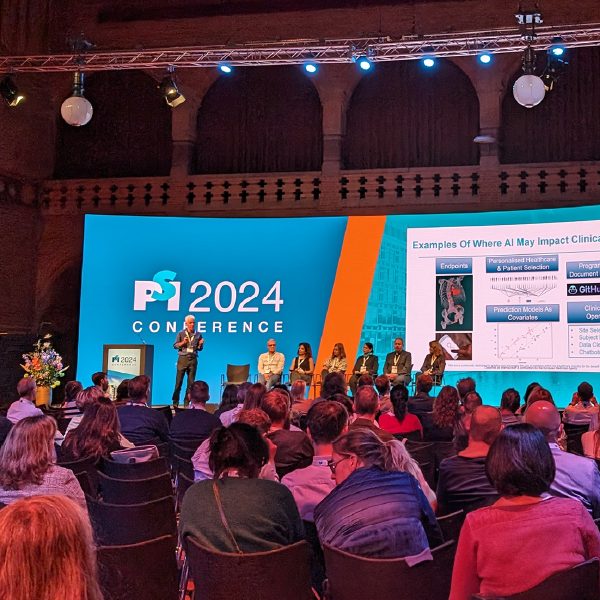
PSI 2024 Ignited Conversations on External Data Sources, Requirements for Estimands, and Bayesian Methodology for Statisticians in Pharma

perspectives
July 16th, 2024
Key Steps to Successful CMC Authoring of IND and IMPD Submissions

perspectives
July 9th, 2024
Managing RTOR Submissions: How to Run a Successful Race from the Top Line Starting Line

perspectives
July 2nd, 2024
Part 1: RWD Noninterventional Study Design and FDA Engagement Opportunity for Early Stage Oncology

perspectives
June 21st, 2024
Peer-Reviewed Journal Articles: The Crucial Role of Publication in the Pharmaceutical Industry

perspectives
June 14th, 2024
A Structured Approach to Benefit-Risk Assessment Throughout Product Development in the Pharmaceutical Industry

perspectives
June 6th, 2024
Datacise and Diversity in Patient Enrollment: Combining Geospatial and Demographic Data to Aid Site Selection

perspectives
May 29th, 2024
Confined Deferrals in Clinical Trial Applications: Anticipating the Revised EU CTR Transparency Rules

perspectives
May 21st, 2024
Psychedelics and Regulatory Considerations Part II: A Shift in Lexicon and Implications of “Nonmedical Use” On Labelling

perspectives
May 10th, 2024
Psychedelics in Drug Development and Regulatory Considerations Part I: Benefit-Risk

perspectives
April 29th, 2024
Validation of Clinical Dashboards for Decision Making