Meet These Four Expectations When Shifting SOPs in the Pharmaceutical Industry into Electronic Format

Standard Operating Procedures (SOPs) in the pharmaceutical industry are documents used by an organization to provide step-by-step actions for a specific process. And, according to a published study in ResearchGate, a typical pharmaceutical company must manage an average of 1,250 SOPs with average maintenance taking more than 15,000 hours per company.
Properly-written Standard Operating Procedures (SOPs) in the pharmaceutical industry are essential, as they can reduce mistakes and miscommunication, as well as ensure reliability and consistency across departments.
Creating Standard Operating Procedures (SOPs) in an electronic system provides a new set of challenges and elevates the level of scrutiny by global regulatory entities during health authority inspections to ensure proper and complete compliance with the Code of Federal Regulations (CFR) for Electronic Records and Electronic Signatures (21 CFR Part 11).
To meet regulatory expectations, there are four necessary steps to get companies on the road to compliance once the decision is made to move Standard Operating Procedures (SOPs) in the pharmaceutical industry into an electronic system.
Step 1: Validating the Electronic System
Any electronic system used for generating or housing GxP data, including approved procedures for performing acts related to generating GxP data, should be properly validated.
The level of validation should be based on a justified and documented risk assessment and a determination of the potential of the system to affect product quality and safety and record integrity. The validation process should include a determination of user access, the need for written procedures for use of the system, and a determination of how the system will be managed.
Step 2: Ensuring Data Integrity
All electronic systems used for housing or generating GxP data should go through a data integrity analysis. The system used for Standard Operating Procedures (SOPs) in the pharmaceutical industry should be no exception.
The goal of this analysis is to ensure full compliance with the Principles of Alcoa+ per the FDA and EMA expectations.
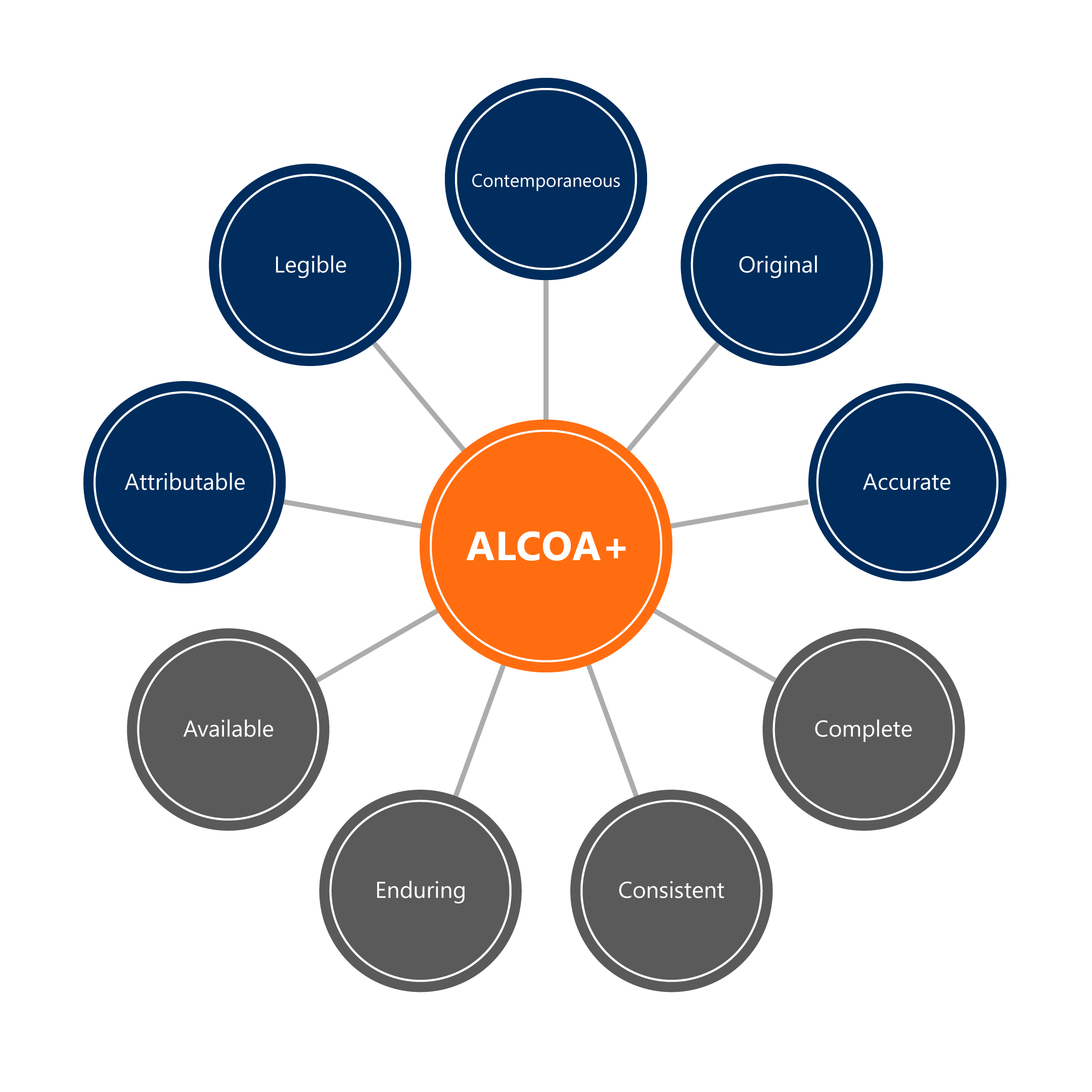
- (A)ttributable-identifiable to the person or system that generated the data
- (L)egible-data can be read and understood
- (C)ontemporaneous-recording data when it occurs
- (O)riginal-original recording of data should be the main record; not copies or transcriptions
- (A)ccurate-a reflection of what happened; error-free
+
- Available-accessible
- Enduring-ensuring data is available long-term
- Consistent-chronological and in an expected sequence
- Complete-nothing has been deleted or lost
Step 3: Enabling Audit Trails
An audit trail is a secure, computer-generated, time-stamped electronic record that allows for reconstruction of the course of events relating to the creation, modification, or deletion of an electronic record.
An audit trail for a document within an electronic document control system, for instance, should include the author of the document, approvers, date and time of any modifications, and a revision history to justify all changes made to the document. Audit trails may need a periodic review, and this review should be determined using risk assessment tools.
Step 4: Performing Periodic Reviews
Two types of review periods should be established for both paper and electronic Standard Operating Procedures (SOPs) in the pharmaceutical industry, as detailed below.
- A review period should be established for determining that content within the Standard Operating Procedures (SOPs) is still current. If content is outdated, the Standard Operating Procedure (SOP) can be revised to update to current processes or regulatory standards.
- A review period should be established as refresher training for those employees that should be responsible for carrying out the procedures within the Standard Operating Procedure (SOP).
Implementation of a new electronic system and migration of current procedures can provide many challenges for an organization within the pharmaceutical industry. This may include the multitude of Standard Operating Procedures (SOPs) that need to be revised, training of current and new employees, or scrutiny from global regulatory agencies during inspections.
Moving forward, experienced and knowledgeable resources are vital to help implement the processes necessary for a successful and smooth transition to an electronic system for Standard Operating Procedures (SOPs) in the pharmaceutical industry.
For questions on migration or further discussion, Please click here to connect with the right resource to respond.
Authored by: Ruth McKnight; Senior Quality and Compliance Specialist, Quality and Compliance.
Suggested For You

perspectives
July 30th, 2024
The Critical Role of Quality Control (QC) – Medical Writing and Beyond

perspectives
July 23rd, 2024
PSI 2024 Ignited Conversations on External Data Sources, Requirements for Estimands, and Bayesian Methodology for Statisticians in Pharma

perspectives
July 16th, 2024
Key Steps to Successful CMC Authoring of IND and IMPD Submissions

perspectives
July 9th, 2024
Managing RTOR Submissions: How to Run a Successful Race from the Top Line Starting Line

perspectives
July 2nd, 2024
Part 1: RWD Noninterventional Study Design and FDA Engagement Opportunity for Early Stage Oncology

perspectives
June 21st, 2024
Peer-Reviewed Journal Articles: The Crucial Role of Publication in the Pharmaceutical Industry

perspectives
June 14th, 2024
A Structured Approach to Benefit-Risk Assessment Throughout Product Development in the Pharmaceutical Industry

perspectives
June 6th, 2024
Datacise and Diversity in Patient Enrollment: Combining Geospatial and Demographic Data to Aid Site Selection

perspectives
May 29th, 2024
Confined Deferrals in Clinical Trial Applications: Anticipating the Revised EU CTR Transparency Rules

perspectives
May 21st, 2024
Psychedelics and Regulatory Considerations Part II: A Shift in Lexicon and Implications of “Nonmedical Use” On Labelling

perspectives
May 10th, 2024
Psychedelics in Drug Development and Regulatory Considerations Part I: Benefit-Risk

perspectives
April 29th, 2024
Validation of Clinical Dashboards for Decision Making