Exploring the use of Real-World Evidence in Regulatory Decision Making Under PDUFA VII

The PDUFA VII Commitment Letter builds on the programs supporting the use of Real-World Evidence (RWE) in regulatory decision-making begun under PDUFA VI. Specifically, the following initiatives incorporating RWE have been incorporated into PDUFA VII:
- Pilot Advancing RWE Program
- Use of RWE negative controls
- Use of RWE for capturing post-approval safety and efficacy data for cell and gene therapy (CGT) products
Pilot Advancing RWE Program
In a Federal Register notice released on October 20, 2022, the FDA has announced that it is committed to establishing an “Advancing RWE Program.”
Per FDA, the purpose of this program is to “seek to improve the quality and acceptability of RWE-based approaches in support of new intended labeling claims, including approval of new indications of approved medical products or to satisfy post-approval study requirements.”
Given the high cost and administrative burden of randomized clinical trials (the current standard for regulatory decision-making), this announcement has garnered much interest.
In the PDUFA Commitment letter, FDA commits to running this pilot intended to identify and characterize and build consistent RWE approaches that could potentially support labeling claims for the efficacy of the drug or that could be used to meet further study requirements implemented at the time of marketing approval, such as PMRs.
To do this, FDA intends to discuss study designs under consideration in public forums. These discussions will focus on data, design, and regulatory issues for studies that have the potential to generate RWE in support of a proposed regulatory decision.
FDA has committed to report “aggregate and anonymized information” on the RWE submissions at least annually starting in June of 2024, if not earlier.
Subsequently, a discussion will be held in a public forum to discuss RWE case studies, and the focus will be on RWE approaches to support regulatory decision-making.
Finally, RWE-related guidance documents will be updated or drafted to contain FDA recommendations built on the experience gained from this pilot.
Use of RWE Negative Controls
As part of PDUFA VII, FDA has committed to the optimization of the Sentinel Initiative and has stated that one of their goals is to build a methodology to allow for causal inference in Sentinel/BEST that may allow for product safety questions to be addressed and thus further advance FDA’s understanding of using RWE for determining effectiveness.
First, the FDA is planning to hold a public workshop and then intends to kick off two projects to develop methods to automate the process and build negative controls. FDA plans to release a report of their findings in 2027.
CGT and RWE
FDA has also committed to continuing to work on novel approaches to development, specifically within the field of cell and gene therapy.
This innovative field has been at the forefront of ground-breaking approvals in recent years, including those for rare diseases, so, understandably, FDA will continue to develop its capabilities to make recommendations and understand the complexities unique to these programs.
Under this initiative, FDA has committed to convening a public meeting on complex CGT products by the end of the fiscal year 2024 and has indicated that the use of RWE and registries for capturing post-approval safety and efficacy data will be discussed. Updated or new guidance on this topic will subsequently be issued.
If you have questions about RWE or any other PDUFA VII Updates, email info@mmsholdings.com to speak to a regulatory or RWE expert.
By: Supriya Perambakam, Global Regulatory Affairs Manager
Learn more about MMS Regulatory Affairs and Operations.
Suggested For You

perspectives
July 30th, 2024
The Critical Role of Quality Control (QC) – Medical Writing and Beyond
perspectives
July 23rd, 2024
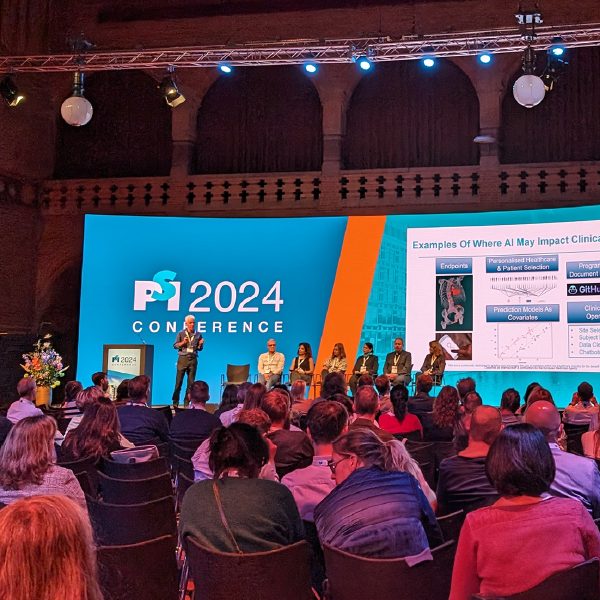
PSI 2024 Ignited Conversations on External Data Sources, Requirements for Estimands, and Bayesian Methodology for Statisticians in Pharma

perspectives
July 16th, 2024
Key Steps to Successful CMC Authoring of IND and IMPD Submissions

perspectives
July 9th, 2024
Managing RTOR Submissions: How to Run a Successful Race from the Top Line Starting Line

perspectives
July 2nd, 2024
Part 1: RWD Noninterventional Study Design and FDA Engagement Opportunity for Early Stage Oncology

perspectives
June 21st, 2024
Peer-Reviewed Journal Articles: The Crucial Role of Publication in the Pharmaceutical Industry

perspectives
June 14th, 2024
A Structured Approach to Benefit-Risk Assessment Throughout Product Development in the Pharmaceutical Industry

perspectives
June 6th, 2024
Datacise and Diversity in Patient Enrollment: Combining Geospatial and Demographic Data to Aid Site Selection

perspectives
May 29th, 2024
Confined Deferrals in Clinical Trial Applications: Anticipating the Revised EU CTR Transparency Rules

perspectives
May 21st, 2024
Psychedelics and Regulatory Considerations Part II: A Shift in Lexicon and Implications of “Nonmedical Use” On Labelling

perspectives
May 10th, 2024
Psychedelics in Drug Development and Regulatory Considerations Part I: Benefit-Risk

perspectives
April 29th, 2024
Validation of Clinical Dashboards for Decision Making