Why Lay Summaries Matter and Their Future

Plain language summaries, commonly known as lay summaries, have become increasingly important for pharmaceutical companies in recent years. However, there are many sponsors that have yet to start their pilot programs for these documents. To answer some commonly-asked questions, we turn to Jennifer Pilgrim, Medical Writer and Transparency Lead at MMS.
Why, in your opinion, are lay summaries becoming more and more important in the pharmaceutical industry?
Industry-wide, there seems to be a move towards greater clinical trial transparency and an emphasis on providing patient-centered services. At MMS, we believe that lay summaries are a natural extension of that effort. In the European Union (EU), lay summaries will soon be a required document for all clinical trials. Any sponsor who conducts research in that region will need to produce lay summaries, and it’s recommended that they start early to work out any issues in advance.
When looking at developing a lay summary template, what are some of the key components that sponsors should consider including?
The EU Clinical Trials Regulation lists 10 elements that should be included in a lay summary. Sponsors who are writing lay summaries for the European market should incorporate each of these elements into their template. These elements include clinical trial identification information (i.e. protocol number), sponsor information, general information on the trial, information on the study population, the investigational product used, any adverse reactions, the overall results of the study, a high-level commentary on the outcome of the study, whether additional clinical trials are planned, and where further information can be found.
Additionally, sponsors should consider the needs of their audience when developing the template. This means that they should make sure that the lay summary is easy to read and understand. It is recommended to write lay summaries at a six to eighth-grade reading level, and we use simplified graphics to help explain the information. This is certainly not an easy task with many therapeutic areas, especially complex endpoints and analyses.
It can be hard to distinguish between promotional and non-promotional language, can you help us understand how to do so effectively?
Sure! It is very important that lay summaries are not perceived as promotional in any way. That is a vital aspect of our review process at MMS for any lay summary that we draft. To ensure that lay summaries remain non-promotional, the writer should choose language that is factual and objective. Rather than attempting to interpret the results of the clinical study or make inferences for the reader, it is preferred to objectively present the results of the study. Additionally, it is imperative to avoid using language such as “best” or “better”, which could be perceived as promotional. The goal is to ensure that the information chosen to present in a lay summary is balanced and accurate, and we have lay person reviews to ensure that happens.
What do you see in the future for lay summaries in the next 5-10 years?
There will be great deal of opportunity in the next five to 10 years with lay summaries, particularly as the EU regulation takes effect. I expect that other countries outside of the EU may begin requiring lay summaries, as well. For instance, the UK may write their own requirements for lay summaries once Brexit takes effect. Another more interesting area of growth is the potential with pediatric studies. Sponsors may need to begin producing lay summaries that are understandable to very young study participants, children. There is currently a lot of discussion within in the industry as far as how best accomplish that—one idea is to create lay summaries in a comic book-style format.
To ask Jennifer any additional questions, send them to info@mmsholdings.com.
Suggested For You

perspectives
July 30th, 2024
The Critical Role of Quality Control (QC) – Medical Writing and Beyond
perspectives
July 23rd, 2024
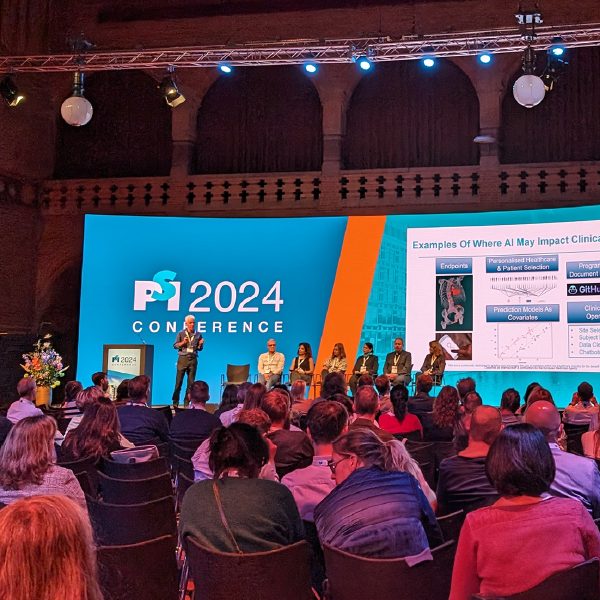
PSI 2024 Ignited Conversations on External Data Sources, Requirements for Estimands, and Bayesian Methodology for Statisticians in Pharma

perspectives
July 16th, 2024
Key Steps to Successful CMC Authoring of IND and IMPD Submissions

perspectives
July 9th, 2024
Managing RTOR Submissions: How to Run a Successful Race from the Top Line Starting Line

perspectives
July 2nd, 2024
Part 1: RWD Noninterventional Study Design and FDA Engagement Opportunity for Early Stage Oncology

perspectives
June 21st, 2024
Peer-Reviewed Journal Articles: The Crucial Role of Publication in the Pharmaceutical Industry

perspectives
June 14th, 2024
A Structured Approach to Benefit-Risk Assessment Throughout Product Development in the Pharmaceutical Industry

perspectives
June 6th, 2024
Datacise and Diversity in Patient Enrollment: Combining Geospatial and Demographic Data to Aid Site Selection

perspectives
May 29th, 2024
Confined Deferrals in Clinical Trial Applications: Anticipating the Revised EU CTR Transparency Rules

perspectives
May 21st, 2024
Psychedelics and Regulatory Considerations Part II: A Shift in Lexicon and Implications of “Nonmedical Use” On Labelling

perspectives
May 10th, 2024
Psychedelics in Drug Development and Regulatory Considerations Part I: Benefit-Risk

perspectives
April 29th, 2024
Validation of Clinical Dashboards for Decision Making