How Real World Data is Changing the Pharmaceutical Industry

Approximately 90 percent of global pharmaceutical companies are using, or have plans to use real world data in the near future, according to a 2018 benchmarking survey from Deloitte. This coincides with an increased focus on the use of real world evidence from the U.S. Food & Drug Administration (FDA).
In November 2018, the FDA launched the MyStudies app – designed to gather real world data from the mobile devices of patients that use the technology. In addition to the MyStudies app, the industry is sourcing real world data from electronic medical records (EMR), ongoing safety surveillance, administrative claims, observational studies, registries, mobile technologies, patient-centered outcomes research activities, social media, and almost any set of socioeconomic data.
More data can lead to shorter clinical trials
In recent years, there has been a growing availability of large amounts of data in healthcare systems – especially related to patient characteristics and outcomes. This leads to an obvious question: can all that data be used to study the effectiveness of drugs?
The answer is: in most cases with some anchors. Using real world data can increase the quantity, quality, and timeliness of useful, trustworthy research results. Additionally, there are many uses of real world evidence that help sponsors understand how treatments really perform and assist in clinical trial planning.
By using digital records to map specific patient populations, sponsors can determine where the largest patient population exists within a specific therapeutic area. Sponsors can also cross-reference patient data with relevant investigator sites to determine the correct physicians that specialize in the treatment/study of disease of interest.
These approaches not only have the ability to maximize study enrollment, but can also lead to shorter clinical trial timelines.
Challenges in using real world data
Being a rather new way to contribute to clinical research, using real world data presents many challenges, including, but not limited to:
1. Availability of data: Data focused on patient characteristics and outcomes is not always accessible; baseline values may be absent in many cases and follow up after treatment may be missing.
2. Concerns about quality/precision: If a sponsor were collecting data on heart attacks or strokes, for instance, the designation may not be as precise or refined as in a clinical trial, with no guidelines to follow for designations. If an adjudication committee does not review and categorize events, the severity may be underreported.
3. Different EMR systems: Not all EMR systems have the same reporting output (i.e. pain score type reported). Updating systems is not simple or cost-effective, making data pooling and statistical analyses required for regulatory reviews nearly impossible.
4. Governance issues: Patient privacy, data security, transparency and confidentiality, access, conflict of interest, intellectual property, and integrity all come into play here; the patients have not consented for their data to be used in an application for an indication.
Each of these issues have the possibility to weaken any finding and pass it off as “noise” and imprecision obscure effects. These problems can reduce the amount of power in a study intended to show a difference between treatments, giving bias toward no difference in a comparison study.
Overcoming the challenges
“Old ways won’t open new doors.” – unknown
To move the pharmaceutical industry forward and bring life-changing therapies to patients quicker, the challenges of using real world evidence must be addressed. This may include:
- Engaging healthcare providers and patients by promoting adherence to practice guidelines and adherence to prescription drugs
- Establishing a framework for confidentiality and security
- Adopting a common approach to configuring digital healthcare data
- Eliminating barriers that promote complexity, while ensuring appropriate safeguards
- Establishing a regulatory framework that provides stakeholder confidence
The ideal situation for using real world evidence will exist when a single universal identifier is set for every U.S. citizen. This standardized data structure could assist sponsors with specialty-specific data entries, laboratory and radiologic outputs, and be the perfect translation of unstructured data. Additionally, a universal identifier would complete the linkage of data between hospitals, pharmacies, outpatient, social media, death registries, and the like, providing open access with consent for full use of de-identified data.
Ten to twenty years from now, using real world evidence in clinical trials will be second nature, but we – as an industry – must do the work to get to that point.
by Erin Booth, PhD
About the author
Erin Booth, Ph.D. is a Manager, Regulatory and Medical Writing, based in Canton, Mich. at the global headquarters of MMS Holdings – an award-winning, data-focused CRO.
Suggested For You

perspectives
July 30th, 2024
The Critical Role of Quality Control (QC) – Medical Writing and Beyond
perspectives
July 23rd, 2024
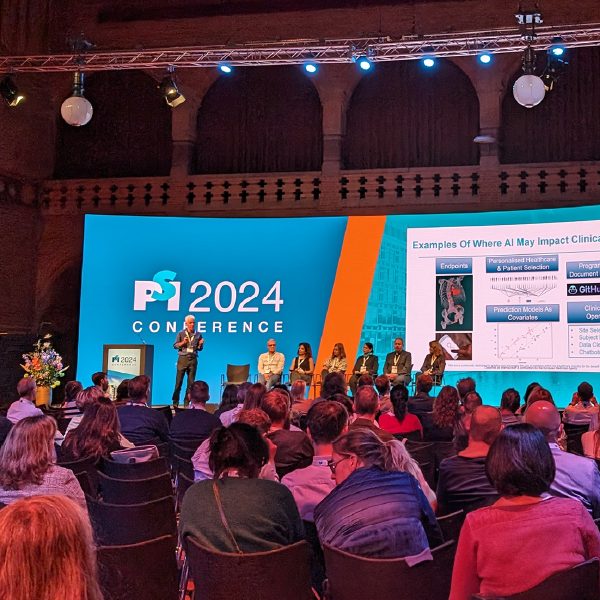
PSI 2024 Ignited Conversations on External Data Sources, Requirements for Estimands, and Bayesian Methodology for Statisticians in Pharma

perspectives
July 16th, 2024
Key Steps to Successful CMC Authoring of IND and IMPD Submissions

perspectives
July 9th, 2024
Managing RTOR Submissions: How to Run a Successful Race from the Top Line Starting Line

perspectives
July 2nd, 2024
Part 1: RWD Noninterventional Study Design and FDA Engagement Opportunity for Early Stage Oncology

perspectives
June 21st, 2024
Peer-Reviewed Journal Articles: The Crucial Role of Publication in the Pharmaceutical Industry

perspectives
June 14th, 2024
A Structured Approach to Benefit-Risk Assessment Throughout Product Development in the Pharmaceutical Industry

perspectives
June 6th, 2024
Datacise and Diversity in Patient Enrollment: Combining Geospatial and Demographic Data to Aid Site Selection

perspectives
May 29th, 2024
Confined Deferrals in Clinical Trial Applications: Anticipating the Revised EU CTR Transparency Rules

perspectives
May 21st, 2024
Psychedelics and Regulatory Considerations Part II: A Shift in Lexicon and Implications of “Nonmedical Use” On Labelling

perspectives
May 10th, 2024
Psychedelics in Drug Development and Regulatory Considerations Part I: Benefit-Risk

perspectives
April 29th, 2024
Validation of Clinical Dashboards for Decision Making