How to overcome project resourcing issues in the pharmaceutical industry

The pharmaceutical industry has eclipsed 4.4 million employees globally. With worldwide sales planned to increase from $860 billion in 2019 to more than $1.06 trillion by 2022, project resourcing will be even more critical than it is today.
The continued expansion of the industry is fueled by an aging baby boomer population – one which is increasingly dependent on further healthcare solutions and treatment, according to an article in the National Institutes of Health. Jobs in these science, technology, engineering, and mathematics (STEM) fields are expanding in tandem with this trend, but the pharmaceutical industry overall still struggles with resourcing issues during crunch times.
What is a resource crunch?
A resource crunch occurs when a shortage of colleagues are available to complete work. In many pharmaceutical companies and service providers, dozens of compounds are often in different states of development at the same time, and not all employees are dedicated to a singular project.
A shortage in resources may be due to higher-than-normal volumes of work, unexpected regulatory requests, holidays, or greater complexity deliverables – to name a few.
For instance, quality control (QC) departments are often running at higher volume levels, as this department would support cross-functional groups throughout an organization. While certain departments may have a few deliverables per month, the QC department could operate at many times that – often into the hundreds.
QC teams can also be stricken with short-notice for projects and shifting timelines, as they are often the last step before data is submitted or a deliverable is finalized.
Finding a helpful method
To combat heavy resource crunch situations, MMS formalized a proprietary program called Adaptive Parallel Processing (APP)™. The APP program sources trained colleagues from around the globe to determine who has windows of availability – no matter how small – at any given time.
While many colleagues are fully allocated to a full-time schedule, there are instances where a resource is waiting for client comments before moving forward, among other situations.
Queries, as part of the APP process, are issued at intermittent schedules to various offices and groups of colleagues depending on functional service area and level of competency. In the case of MMS QC, the APP system would begin by looking at QC experts at the Bangalore and Hyderabad offices, then move on to U.S., EU, and South Africa locations.
During the APP process, the competency and capability of handling particular documents and data is analyzed, accordingly. It is important to understand these levels to keep quality at the forefront, while also respecting timelines.
Additionally, timelines can become tricky in the pharmaceutical industry. Certain documents and data may be held to tight internal deadlines and other deadlines may be dictated by a regulatory body. This makes tasks, like reporting on the availability of resources, even more critical.
Questions to ask before shifting resources
Irrespective of the type of process used, there are standard questions that pharmaceutical executives should consider asking themselves when re-evaluating resourcing, including:
- What is the duration of the project’s timeline?
- What is the priority level?
- Is there flexibility to shift current project timelines?
- Can other project timelines be shifted or put on hold to complete this task?
- What is the type of deliverable?
- What is the complexity of the deliverable?
- Who is best qualified for the work?
- How can we best make use of colleagues in different time zones?
Few successful pharmaceutical companies or service providers will be able to rid themselves of instances where they have tightened resources. However, through the proper training and programs like APP, there are positive ways forward.
by Kristin Chesney, MBA and Don McLean, MBA
Suggested For You

perspectives
July 30th, 2024
The Critical Role of Quality Control (QC) – Medical Writing and Beyond
perspectives
July 23rd, 2024
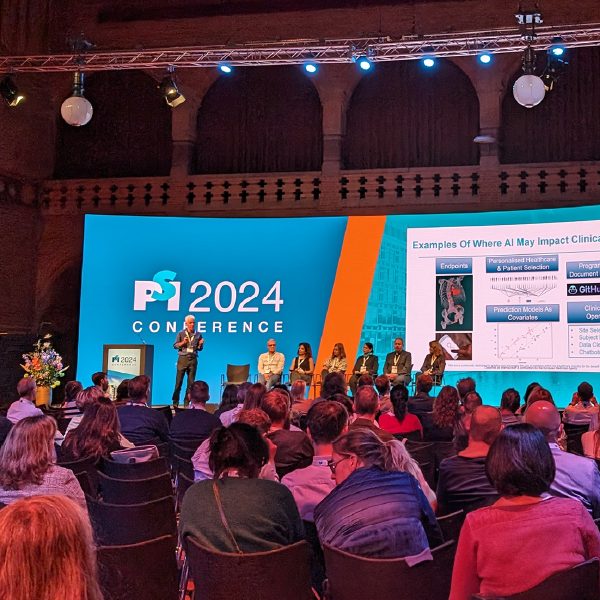
PSI 2024 Ignited Conversations on External Data Sources, Requirements for Estimands, and Bayesian Methodology for Statisticians in Pharma

perspectives
July 16th, 2024
Key Steps to Successful CMC Authoring of IND and IMPD Submissions

perspectives
July 9th, 2024
Managing RTOR Submissions: How to Run a Successful Race from the Top Line Starting Line

perspectives
July 2nd, 2024
Part 1: RWD Noninterventional Study Design and FDA Engagement Opportunity for Early Stage Oncology

perspectives
June 21st, 2024
Peer-Reviewed Journal Articles: The Crucial Role of Publication in the Pharmaceutical Industry

perspectives
June 14th, 2024
A Structured Approach to Benefit-Risk Assessment Throughout Product Development in the Pharmaceutical Industry

perspectives
June 6th, 2024
Datacise and Diversity in Patient Enrollment: Combining Geospatial and Demographic Data to Aid Site Selection

perspectives
May 29th, 2024
Confined Deferrals in Clinical Trial Applications: Anticipating the Revised EU CTR Transparency Rules

perspectives
May 21st, 2024
Psychedelics and Regulatory Considerations Part II: A Shift in Lexicon and Implications of “Nonmedical Use” On Labelling

perspectives
May 10th, 2024
Psychedelics in Drug Development and Regulatory Considerations Part I: Benefit-Risk

perspectives
April 29th, 2024
Validation of Clinical Dashboards for Decision Making